Electrical Services In Essex
Certified Electrical & Renewable Energy Specialists Serving Homes & Businesses Across Essex
Our Electrical Services
Comprehensive electrical solutions for domestic and commercial properties across Essex
Why Choose Future Smart Electrical?
Your trusted electrical & renewable energy partner in Essex
Fully Certified
NAPIT, MCS, OZEV, and F-Gas certified electricians
Local Essex Company
Based in Essex, serving all local areas
5-Star Rated
178 five-star reviews from satisfied customers
Transparent Pricing
Clear quotes with no hidden costs
Professional Installs
Clean, tidy, and compliant workmanship
Fast Response
Quick turnaround on all projects
Renewable Specialists
Experts in sustainable energy solutions
Excellent Support
Ongoing aftercare and maintenance
Our Installation Process
Simple, transparent, and professional from start to finish
Free Consultation
Discuss your requirements and get expert advice
Site Survey
Professional assessment of your property
Detailed Quote
Transparent pricing with no hidden costs
Professional Installation
Clean, compliant, and efficient work
Certification & Aftercare
Full documentation and ongoing support
Areas We Cover in Essex
Future Smart Electrical serves homes and businesses across the whole of Essex. Find your area below.
Don't see your area?
We cover all of Essex and surrounding areas. Get in touch and we'll confirm coverage for your location.
Call Us NowWhat Our Customers Say
Trusted by homeowners and businesses across Essex — 178 five-star Google reviews
“I'm based in Colchester and have been trying to find a good electrician that I can trust to complete an EICR on my property, following a bad experience with another company. After initially speaking with Elise for a quote, I felt at ease and the service provided was excellent. Highly professional and trustworthy.”
1 / 6
“I'm based in Colchester and have been trying to find a good electrician that I can trust to complete an EICR on my property, following a bad experience with another company. After initially speaking with Elise for a quote, I felt at ease and the service provided was excellent. Highly professional and trustworthy.”
“Can I say a big thank you to you for such a great job. We had 24 panels over three aspects of our rather difficult roof - being 100 year old converted bungalow the roof tiles were a little bit of a pain. The team handled it brilliantly and the solar skirts really finished the install off beautifully.”
“Excellent Emergency Electrician over Xmas. I had a complicated issue with a solar inverter cutting the supply to the house. Smart attended and worked their way through the issue and made a temporary repair to get us through Christmas. Andre was fantastic - highly recommend.”
“Needed a small electrical job done ASAP, issued a very reasonable quote & also had someone out to me the same day, 5☆ service given. Would definitely recommend & would not hesitate to use again.”
“Excellent service from Future Smart, I was able to get an electrical installation condition report for a house sale arranged to suit my timing. They did a very thorough inspection, discussed the result after. The report was issued promptly.”
“Bruce was a star, he explained everything we needed to do over the phone, gave us a great tracking option so we knew when he would arrive (he was early) and made sure we had everything we needed. He is a credit to a great company. Thanks for your help pal!”
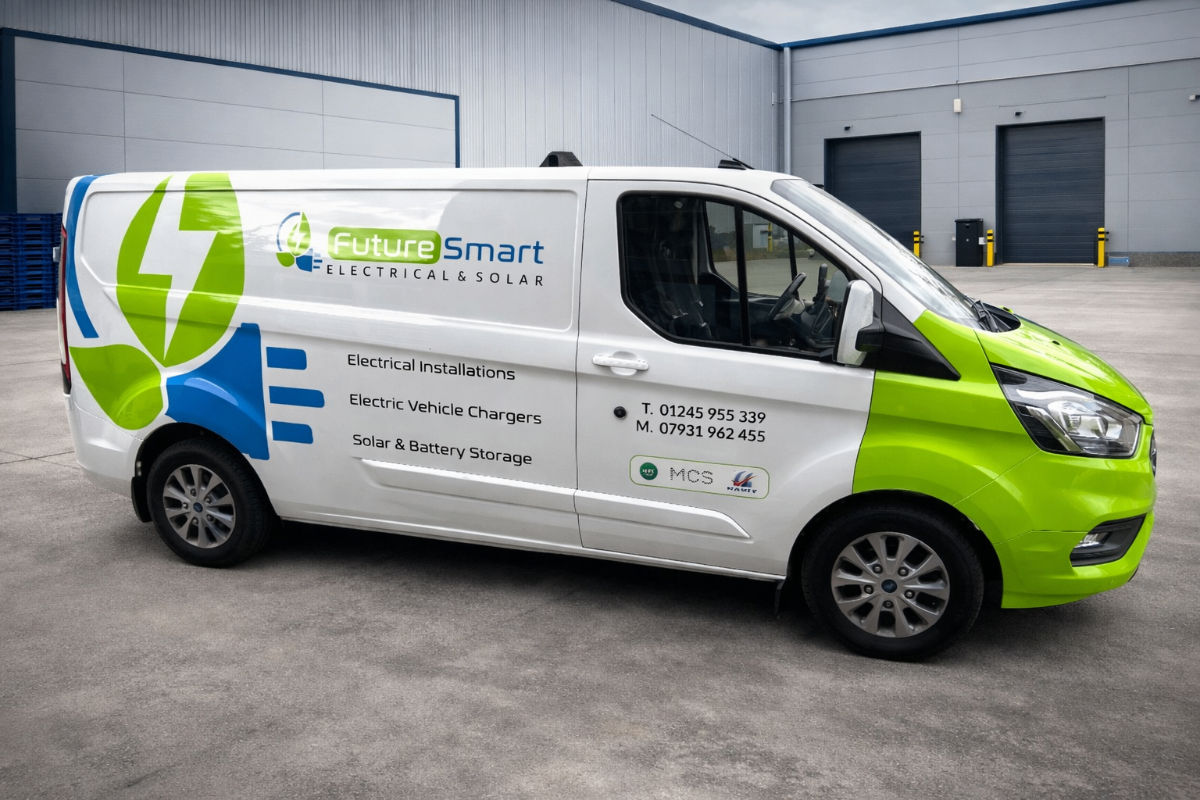
Essex Renewable & Electrical Specialists
Future Smart Electrical are qualified electricians based in Essex, delivering professional EV charger installations, Solar PV systems and air conditioning installations for domestic and commercial clients.
We focus on compliance, safety, clean installs, future-proof technology, energy efficiency, and long-term savings for all our customers across Essex.
- Fully certified and compliant installations
- Safety-first approach on every project
- Future-proof renewable energy solutions
- Long-term energy savings guaranteed
Ready to Upgrade Your Property?
Get a free, no-obligation quote for your EV charger, solar PV, or air conditioning installation in Essex

